
Mary Kay and Market Saturation
 Written by Lazy Gardens
Explaining the concept of market saturation, and why it’s next to impossible to build a viable retail selling business with Mary Kay.
I’ve noticed some Mary Kay training material that misuses the term “market saturation,” probably out of ignorance rather than malice. The materials claim that since Mary Kay users are only about 10% of the population, that the market is not saturated and there is lots of room for new consultants.
It’s misleading. In economics, “market saturation” describes the situation where a product has become so widely distributed within the intended market that the cost of reaching the remainder is greater than the profit from anything they might buy. The cosmetics market in the US is 99.999% saturated – at any income level, anyone who wants to wear cosmetics has them or can get them.
“Market share” – the correct term – is how big a slice of the product pie a company has. Mary K ay literature indicates that Mary Kay Cosmetics has about 10% market share. (I feel this is way too high, particularly since Kline & Company’s 2004 Global Cosmetics & Toiletries study pegged direct sales at 10% of the global market for cosmetics and beauty products. This figure includes ALL direct selling companies, so Mary Kay’s share of the market is smaller than 10%.)
This 10% figure promoted in Mary Kay literature looks promising: it looks like there’s 90% available for you to sell into!
But it’s not that easy. For MK to expand, the independent beauty consultants have to get a cosmetics user to switch brands, and the user may not want to incur the “cost of switching”. Yes, another economics term – I used to hang out with marketing suits at lunch.
A rational consumer will not switch to a lower price product if the switching costs in terms of monetary cost, effort, time, uncertainty, and other reasons, are greater than the price differential between the two products. Needless to say, switching the consumer to a higher priced product is going to be even harder. You have to get their “mindshare” first, and usually work on their emotions. That requires a lot of advertising (L’Oreal’s “you’re worth it” campaign), emphasizing special features (Volvo’s safety first campaign), and searching for emotional hooks into the consumer’s mind (most ads for expensive baby diapers).
By not advertising consistently and effectively as a corporation, and by prohibiting consultants the usual small businessperson’s routes to local mindshare, such as local ads and public displays, Mary Kay has damaged their consultants’ ability to compete for market share in the US. But as long as the consultants can be convinced it’s their fault, and keep ordering wholesale, corporate has no reason to take the expensive route of getting mindshare.
Note from PinkTruth: Let’s not forget one of the most daunting costs of switching to Mary Kay that everyone always seems to forget: the knowledge that as a Mary Kay customer, you’ll likely be hounded repeatedly to attend guest events, do a practice interview, or “give your opinion” on the marketing plan….


 Visit the
See Mary Kay doesn’t care because they are making money off of consultants putting themselves in debt.
I had to file bankruptcy and they still still think Im making a huge mistake for returning my products
They’re saying that to make you feel guilty for making them eat a few hundred dollars of commission chargeback. Don’t fall for it.
They’re fools to even suggest it. Do they really think they know better than a Federal Judge, your lawyer, and a Bankruptcy Trustee? When you’re in bankruptcy, selling back your inventory is in the best interest of your creditors, and in your best interest too.
Excellent article.
This article was amazing. So straightforward!
I was once given info from my SD/NSD LT that said for every bank and branch of said bank was enough people to support a SD in any given town. These stats were pulled from census records which did not track actual MK users. That being said, ALL the people banking at said bank have to be MK users. Which would completely negate Forbes list of Top 10 global cosmetic companies. And solidify that women just want wrinkle cream. Not the dump truck load of bovine fecal matter that comes with MK.
My NSD in Canada used to teach this, too. I understood it to mean that the population base in an area that could support a bank branch would be enough to support a Director. My back-of-mind question was this: if a Director is operating in a community of, say 800-1000 people, and she has even half of her 24 IBCs in that same community, who the heck are the customers? Take away (most of) the men, everyone under 18, and divide the remaining population by 12 IBCs, you leave maybe 20 potential customers per IBC, then subtract anyone whose income won’t allow that spending and those who are loyal to other brands… not many left to buy. AND, if half of your IBCs live in another town, then you are likely to have some other SD’s IBCs in your town, taking from the customer base. That particular MK Math Fact should send people running away from those teaching it!
My favorite lie: “As long as God keeps making baby girls, you will never run out of customers”
But we have to wait 18 years to get some new ones…. or track customer’s offspring on the back of the profile card.
Mary Kay has been around for over 50 years, and recruits thousands of women every month.
If the products are as easy to sell as they want you to believe, why have they never been able to grow beyond that magic 10% level?
If the company gives women such a wonderful opportunity, why is Seminar attendance falling every year?
All you have to do to check the saturation level of Mary Kay products in the market is go to eBay and search for Mary Kay offerings. There are normally over 60,000 listings, at 50% or more off with free shipping, and most of those listings will expire with no bids and no sales.
“The market is not saturated” is an oft-repeated fable. Along with:
– MK has more vehicles on the road than anyone, second only to the U.S. government.
– MK has more vehicles on the road than anyone, second only to UPS.
– MK is taught at Harvard, Yale, Stanford, and other business-schools across the U.S.
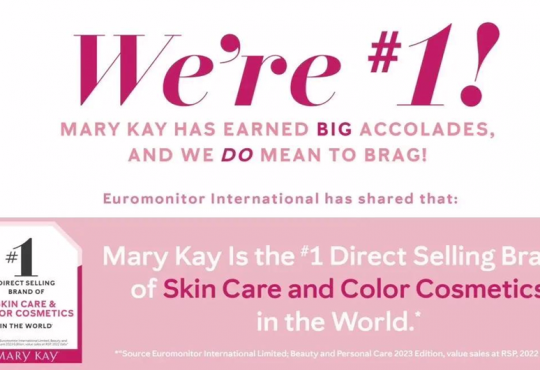
– MK is the #1-selling brand of skincare and color cosmetics in the U.S.
– MK products are FDA-approved.
– MK products have the Good Housekeeping Seal of Approval.
– MK has more women millionaires than any other company.
And, I’ll end here with a line I heard a Sales Director tell new IBCs in a training class:
“OK, now, everyone nod like little bobble-head dolls.”
The market is saturated because of all the financial and other pain caused to IBC’s and directors across the world for 50 years. Whether or not PT existed and even before the internet, the word was out to avoid MK. I heard MK was a cult and an mlm decades ago. I tried speaking with MK Corp about my director decades ago an they did not care. If MK was so great, they would be endorsed by a top celebrity and often in real magazines. Instead consultants are left to flog these ever changing products at open houses (where no one shows), at trade shows, garage sales, craft fairs and eventually ebay. Everyone has heard of MK with the deception of top earners. The same top earners who can barely afford the rent on their tiny apartments. The fake it till you make it no longer works.
The reason they don’t have a celebrity spokesperson is because they can’t afford one. It’s also the reason they’ve limited the chargeback policies as well as updated the NSD maintenance numbers. They’re bleeding money.
And with the constant churn of consultants, a big chunk of the remaining 90% of consumers are people who’ve already been in MK and want nothing to do with it anymore.
“people who’ve already been in MK & want nothing to do with it anymore!”, . . . . . . oh, my, that is such a good, true one, I’m still laughing! hee,hee,hee, ha, ha, ha.
a big chunk of the remaining 90% of consumers are people who’ve already been in MK and want nothing to do with it anymore.
Oh yeah … when I first moved here, there were about 6 IBCs in town … there are still 6 or so, but the names have changed. And the earlier ones are selling their stock at the flea market, wanting nothing at all to do with their old unit.
I’ve noticed the same thing! I was out to lunch with a friend recently and saw a Director who was picking up bags of food to take back to where she works now. Guess the “executive income” needs to be supplemented by being a runner now? Is she even a Director anymore?
No more daily posts?
This is one of the 1st blogs I check daily.
Shay – New format (grrr, I hate change), but same number of posts.
Tracy does 3 or so new posts a week.
Sometimes I forget!! 🙂